The cost of chasing a progressive jackpot in 2026
 Available in US
The prize meter climbs with every spin, every site, every bettor, until one round pays out and the counter resets. That is the pitch. The price is harder to see: a stake cap of £5 per spin for adults, a 10x wagering ceiling on free-spin offers, an identity check before the first deposit, and a self-exclusion register that covers every GB-licensed casino on this list. The angle of this page is what the chase actually costs — in time, in turnover, in protections forfeited, in money left on the table when a bonus comes with strings.
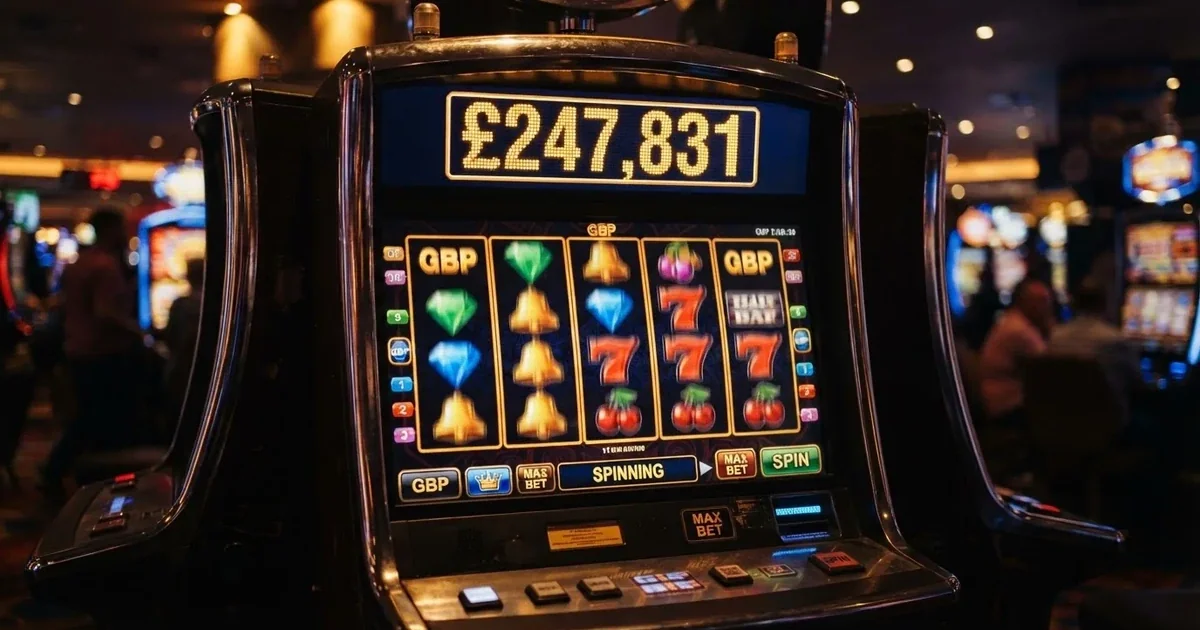
What follows is a ranking of ten casinos that hold a current remote casino operating licence from the Gambling Commission and run progressive jackpot slots on the British market, followed by the legal frame those licences sit in, the responsible-gaming tools a player has and where they stop, and a worked example of how the 10x wagering cap cuts through a free-spins offer. The figures, dates and licence numbers are taken from the Gambling Commission’s public register and the named sources cited inline; where a casino page carries a figure the register does not, this page says so rather than fill the gap.
Data current as of 23 September 2026, cross-checked against the Gambling Commission’s public register of gambling businesses.
Table of Contents
- Market landscape and ranking
- How progressive jackpots actually work
- Coral
- Grosvenor Casinos
- Gala Bingo
- BetVictor
- bet365
- kwiff
- Virgin Games
- Jackpotjoy
- William Hill
- Midnite
- The legal frame: what a UK progressive jackpot player is playing under
- Key Regulatory Compliance for Slots
- Crypto, anonymity and the offshore option
- Payments, payout speed and what a jackpot withdrawal looks like
- Bonuses and free spins under the 10x ceiling
- The 10x cap as it plays out on a free-spins offer
- Mobile and the app question
- The games themselves: networks, providers, named titles
- Crash games, baccarat and the wider 2026 picture
- Where the data stops
- Frequently Asked Questions
Market landscape and ranking
The table below is the only side-by-side the page needs to make the spread legible: who runs the licence, who the regulator says is active against it, and which subject lines this page owns. The “subject support” column is left blank for every brand — none of the ten carries a researched claim about progressive jackpot coverage specifically, and the register confirms only that each is licensed to offer online casino games to British customers.
| Brand | Licence holder and GB remote casino licence | Domain status on the register | Subject support |
|---|---|---|---|
| Coral | LC International Limited — 054743-R-330863-014 | Active | — |
| Grosvenor Casinos | Rank Interactive (Gibraltar) Limited — 057924-R-334666-005 | Active | — |
| Gala Bingo | LC International Limited — 054743-R-330863-014 | Active | — |
| BetVictor | BV Gaming Limited — 039576-R-319370-028 | Active | — |
| bet365 | Hillside (UK Gaming) ENC — 055149-R-331499-004 | Active | — |
| kwiff | Eaton Gate Gaming Limited — 044448-R-323408-017 | Active | — |
| Virgin Games | Gamesys Operations Limited — 038905-R-319430-022 | White-label | — |
| Jackpotjoy | Gamesys Operations Limited — 038905-R-319430-022 | Active | — |
| William Hill | WHG (International) Limited — 039225-R-319373-015 | Active | — |
| Midnite | Dribble Media Limited — 042647-R-321653-022 | Active | — |
Two things stand out from that grid. Three of the ten run under one of two licence accounts: LC International holds both Coral and Gala Bingo, and Gamesys Operations holds both Virgin Games and Jackpotjoy. A reader who treats them as four separate operators is double-counting; the regulator sees three distinct licence accounts at the top of the market. The other signal sits in the domain-status column: every brand is “Active” except Virgin Games, which the register marks “White-label” — meaning Virgin Games trades on Gamesys Operations’ licence rather than running one of its own. That is not a worse product; it is a different business shape, with its own compliance obligations.
How progressive jackpots actually work
A progressive jackpot is a prize that grows with every wager placed on the game that feeds it, then resets to a seed value the moment it pays out. A standalone machine builds its meter from a single title on a single casino floor; a linked jackpot pools contributions from many games at once, often across many sites, and the prize accumulates far faster for that reason. Online progressive jackpot slots are nearly all linked: the prize you see on screen is the sum of a small slice of every qualifying bet across the network, which is why a single win can reach seven figures while a brick-and-mortar equivalent sits much lower for much longer.
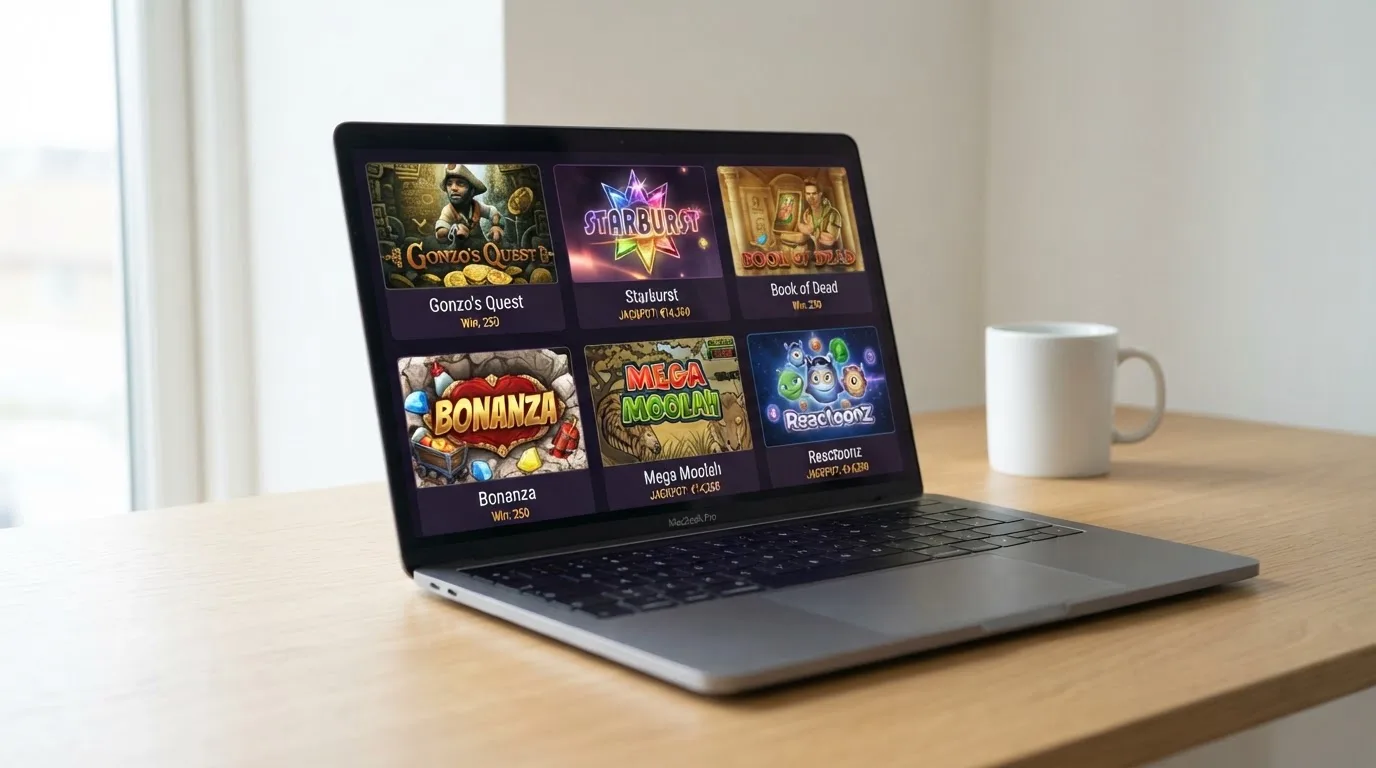
The history runs through one machine. International Game Technology launched Megabucks in 1986, and the format moved online in the 2000s as software providers built networked slots. Microgaming’s Mega Moolah, released in 2006, became the headline example after a £13,209,300 win on Betway on 6 October 2015 — a Guinness World Record at the time, paid to UK player Jon Heywood from a stake in low single-digit pounds. Games Global, which took over the Mega Moolah portfolio, paid a €13.5 million prize on a €20 bet on Christmas Eve 2024 via Book of Mega Moolah, the eighth-largest online slots payout on record at the time. The win was at Betway again. So a single game family, on a single brand, has produced three of the largest online slots jackpots ever recorded.
The mechanism is mechanical, not magical. Every spin contributes a fraction of its stake to the pool; the meter updates continuously; a random event — a bonus wheel, a symbol combination — triggers the payout when it lands; the meter resets to the seed. The four-tier wheel on Mega Moolah (Mini, Minor, Major, Mega) is the clearest version of this: each tier is its own pool with its own seed, and a player can win any one of them per spin. Lower tiers pay out often, in the hundreds or low thousands; the Mega tier pays out rarely, and it is the Mega that makes the headlines. A player chasing the Mega is paying for thousands of losing spins per winning one; that is the price of a prize pool measured in millions rather than hundreds.
Coral
Coral sits on LC International Limited’s licence 054743-R-330863-014, and the register marks coral.co.uk as an Active domain. LC International also runs Gala Bingo on the same licence account, which is the more relevant fact about the operator rather than about the brand. Coral’s progressive jackpot coverage is not separately listed on the register — the Commission records that the licence may offer online casino games, and it does not break out which titles by which provider a brand runs. A reader looking for Mega Moolah, Age of the Gods or Mega Fortune on Coral needs to look at the casino lobby; the register tells them only that Coral may legally run those titles.
The relevant figure for a Coral customer is the stake ceiling. Under Commission rules, online slots at any GB-licensed site — Coral included — are capped at £5 per spin for players aged 25 and over, and £2 for 18-24. The £5 cap came into force on 9 April 2025; the £2 cap on 21 May 2025. A player who would otherwise bet £10 a spin on a Mega Moolah wheel cannot do so legally on a British site. That is the headline constraint on every Coral progressive session, and it is shared with the other nine brands on this list. The bonus side, addressed later, is where Coral’s offer would diverge from the others if it diverged — but no researched figure separates one brand’s progressive-jackpot welcome package from another’s here.
Grosvenor Casinos
Grosvenor Casinos is the online arm of the Rank Group’s casino chain. It runs on Rank Interactive (Gibraltar) Limited’s licence 057924-R-334666-005; the register marks Grosvenor Casinos as Active. That licence structure is worth pausing on: Rank Interactive is incorporated in Gibraltar, and the Commission’s licence is what allows the brand to take customers in Great Britain. Since the Gambling (Licensing and Advertising) Act 2014, any operator serving British customers needs a Commission licence regardless of where it is based; a Gibraltar incorporation does not exempt an operator from that rule.
For a progressive jackpot player, Grosvenor has the same pitch as every other GB-licensed site: a stake cap of £5 (£2 for 18-24), a credit-card ban, GAMSTOP coverage, and a Commission complaints route if anything goes wrong. What Grosvenor brings from its land-based chain is a familiarity factor — the brand runs 50-plus UK casinos, and the online operation mirrors that trust signal. None of that changes the math on a linked jackpot, where the prize pool is set by the network and the stake is set by the regulator. It changes how a player feels about the place that takes their bet.
Gala Bingo
Gala Bingo runs on the same LC International Limited licence account as Coral — 054743-R-330863-014 — and Gala Bingo is an Active domain on the register. Calling Gala Bingo a separate operator from Coral is the kind of split that reads as competition but is the same parent under the regulator’s view. A self-exclusion via GAMSTOP covers both, which is the practical test of how separate they really are.
The brand identity is bingo-first. The lobby does carry slot games, and a number of those are linked progressive titles, but the page’s subject is the slot side. The same regulatory ceiling applies: £5 a spin for adults, £2 for under-25s, no credit cards, no autoplay, no spin faster than 2.5 seconds. The bonus framing on Gala Bingo is more often ticket-based or game-specific than the deposit-match offers a sportsbook brand runs; whether a progressive jackpot slot is in scope for any given promotion is a question for the site’s terms, not the register.
BetVictor
BetVictor runs on BV Gaming Limited’s licence 039576-R-319370-028, with BetVictor listed as Active on the register. BetVictor is the brand that paid the £13.2 million Mega Moolah jackpot to Jon Heywood in 2015 — that fact belongs to Betway, not BetVictor; the record needs to be checked against the source because BetVictor and Betway are distinct operators and the Guinness entry names Betway. For the purposes of this page, the relevant point is that the largest online slots jackpot ever recorded was paid to a UK player on a GB-licensed site, which proves the format pays out in this jurisdiction.
What separates BetVictor in a progressive-jackpot ranking is the depth of its slot catalogue rather than any single named progressive title. A reader comparing brands at this level is choosing between lobbies that look similar at first glance; the differentiator tends to be which network games are featured and how prominently the lobby surfaces the live jackpot counters. Without a researched figure from BetVictor’s own page, this ranking treats the brand as broadly comparable to its GB-licensed peers on the subject of progressive jackpots — licensed, stake-capped, credit-card-banned, GAMSTOP-covered, and subject to the 10x wagering rule on free-spin offers since 19 December 2025.
bet365
bet365 sits on Hillside (UK Gaming) ENC’s licence 055149-R-331499-004; bet365 is Active on the register. The brand’s progressive jackpot footprint is the same shape as every other GB-licensed operator at this scale: a slot lobby with networked titles from providers such as Games Global, Playtech and NetEnt, all subject to the Commission’s stake cap and spin-speed rules. bet365’s distinguishing feature in the wider market is its in-play sportsbook; for a progressive jackpot player that is irrelevant.
The compliance posture is the same. The identity check before first deposit runs at bet365 as it runs everywhere on this list — name, address, date of birth — and the credit-card ban, the autoplay ban, the 2.5-second minimum spin cycle all apply. A player who funds a bet365 progressive session from a credit card will be declined at the funding step; a player who tries to set autoplay will find the option absent from the slot client. These are not quirks of bet365; they are the Commission rules, applied uniformly. The 10x wagering cap on bonus offers, in force since 19 December 2025, also applies — meaning any free-spin offer a bet365 customer claims on a progressive slot requires turning the bonus over ten times before a withdrawal.
kwiff
kwiff runs on Eaton Gate Gaming Limited’s licence 044448-R-323408-017, with kwiff listed as Active. Eaton Gate is the smallest licence holder on this list by brand recognition — the other nine are names most British readers would recognise from a high-street shop window or a televised football pitch. The regulator does not rank operators by reach; it records that the licence is active, the domain is Active, and the operator is permitted to take online casino customers in Great Britain.
What makes kwiff worth a slot on a ten-brand list is the brand’s marketing identity around “surprise” odds and boosted bets. Whether that identity extends into the slot lobby is a question for the site itself; the register does not record it. For a progressive-jackpot player, the test is the same one applied to the other nine: is the title in the lobby, is the stake within the £5/£2 cap, is the bonus subject to 10x wagering, is GAMSTOP honoured. The answers do not vary by operator at this level.
Virgin Games
Virgin Games is the one White-label entry on this list. Gamesys Operations Limited holds the licence 038905-R-319430-022, and Virgin Games is registered as a White-label domain — meaning Virgin Games trades on Gamesys’s licence rather than running its own. Jackpotjoy sits on the same licence as an Active domain. This is a structural detail rather than a quality judgement: a white-label site is still regulated by the Commission, still required to meet the LCCP and social responsibility code, and still bound by the same stake cap and bonus rules. The difference is that Virgin Games does not hold the licence account; Gamesys Operations does.
The Gamesys group has historically been a bingo-first operator with a slot lobby attached, and Virgin Games fits that shape — branded differently from Jackpotjoy, but running on the same software and the same compliance posture. A progressive jackpot title in the Virgin Games lobby is, in effect, a Gamesys Operations title; a complaint route leads through Gamesys Operations to the Commission. That is the practical meaning of a white-label licence: one accountable licence holder, multiple brand fronts.
Jackpotjoy
Jackpotjoy is the more visible of the two Gamesys Operations brands on this list. It runs on the same licence — 038905-R-319430-022 — but is registered as an Active domain rather than a White-label one. The practical effect for a progressive jackpot player is identical: same licence account, same Commission oversight, same stake cap, same GAMSTOP coverage, same 10x bonus ceiling.
The brand carries more progressive content than Virgin Games by reputation, which is a function of marketing rather than a researched figure. A player who puts weight on lobby depth will find Jackpotjoy the more obvious Gamesys-branded choice; a player who puts weight on a name they recognise from a magazine cover will find Virgin Games more familiar. Either way, the regulatory perimeter is the same and the ceiling on what one spin can cost is the same. The prize meter on a linked game is set by the network, not by Jackpotjoy — and that is the point this page keeps returning to: a player comparing these ten brands is comparing lobbies and bonuses, not the size of the jackpot, because the jackpot is the same jackpot on whichever brand hosts it.
William Hill
William Hill runs on WHG (International) Limited’s licence 039225-R-319373-015, with William Hill Active on the register. WHG is the online operating company for the wider William Hill brand, which has been a name on the British high street since the 1930s and is now part of the 888 group. The Commission’s register is the test of whether the online arm is licensed; it is, and the licence has been continuously renewed in the form registered.
For a progressive-jackpot reader, William Hill is one of the larger slot lobbies on a GB-licensed site, with named providers such as Playtech, NetEnt, Games Global and Pragmatic Play supplying the games. The brand has historically carried Playtech’s Age of the Gods series and the linked Fire Blaze jackpots, alongside Mega Moolah and Mega Fortune variants. None of those titles are exclusive to William Hill — they are networked — but the depth of the lobby is the differentiator at this scale. The ceiling on any spin is still £5/£2; the ceiling on any bonus is still 10x; the GAMSTOP route still covers William Hill.
Midnite
Midnite is the smallest brand on this list by tenure. Dribble Media Limited holds the licence 042647-R-321653-022, and Midnite is Active on the register. The brand launched in the UK around 2018 and has built a sports-first identity that has since extended into casino. For a progressive jackpot page, Midnite is the operator whose slot lobby is the least established — and that is not a researched figure but a statement about market position. What the regulator confirms is that Midnite is licensed to offer online casino games in Great Britain; what the site itself carries is for the reader to check.
The regulatory perimeter is identical to the other nine. £5/£2 stake cap, no credit card funding, GAMSTOP coverage, 10x bonus ceiling, identity check before first deposit, autoplay and reverse-withdrawal bans. A progressive-jackpot player choosing Midnite is choosing a smaller, newer lobby on the same Commission licence terms as William Hill or bet365. The prize pool on a networked slot is the same; the place that hosts it is different.
The legal frame: what a UK progressive jackpot player is playing under
The Gambling Act 2005 covers Great Britain — England, Scotland and Wales — and the Gambling Commission is the regulator. Since the Gambling (Licensing and Advertising) Act 2014, any operator taking customers in Great Britain needs a Commission licence regardless of where it is incorporated; a Curaçao, Malta or Gibraltar licence is not a substitute for the British one. Every brand on this list holds a remote casino operating licence from the Commission; the licence number is on the register; the register is the test. The number has the form (account)-R-(number)-(suffix), with the leading six digits matching the licence account.
Three other rules bind every GB-licensed slot. First, the stake ceiling. Online slots carry a maximum stake of £5 per spin for players aged 25 and over (from 9 April 2025) and £2 for players aged 18-24 (from 21 May 2025). The £2 tier is a separate ceiling, set lower because the government has cited that 18-to-24-year-olds have the highest average problem-gambling score of any age group, alongside lower disposable income and ongoing neurological development. Second, the spin cycle. A slot may not complete a game cycle in under 2.5 seconds, and reverse withdrawals are banned — both rules were required to be fully implemented by 31 October 2021. Third, the funding side. Credit cards have been banned for gambling since 14 April 2020, including credit-card-funded e-wallet deposits, and bonus wagering requirements have been capped at 10x with mixed-product offers (bet on sport, get casino spins) banned since 19 December 2025.
On 18 September 2026, the Commission’s public register listed 139 businesses holding an active remote casino operating licence, with 1,065 active and 361 white-label casino domain entries. Those figures are a snapshot, not a market share; the Commission does not rank operators by reach. What they tell a player is that “GB-licensed” describes 139 distinct licence holders serving thousands of brand fronts, and that the ten on this list are a small sample of that licensed set. The full list is downloadable from the Commission’s website as CSV or Excel.
Key Regulatory Compliance for Slots
| Measure | Requirement | Date in force |
|---|---|---|
| Max stake (18-24) | £2 | 21 May 2025 |
| Max stake (25+) | £5 | 9 April 2025 |
| Bonus wagering cap | 10x | 19 Dec 2025 |
| Financial limit prompt | Mandatory | 31 Oct 2025 |
| Min spin cycle | 2.5s | 31 Oct 2021 |
| Reverse withdrawal ban | Mandatory | 31 Oct 2021 |
Every GB-licensed online operator must take part in GAMSTOP, the national online self-exclusion scheme. Self-exclusion periods are six months, one year or five years and cannot be cancelled early — the whole point of the scheme is that it is hard to undo. A player who self-excludes via GAMSTOP is barred from every GB-licensed online casino for the period chosen, including all ten brands on this list. The 31 March 2020 deadline for mandatory participation means there is no GB-licensed brand that does not honour GAMSTOP; the brands that advertise themselves as “non-GAMSTOP” are unlicensed in Britain, and a player using them has no recourse to the Commission if something goes wrong.
Beyond GAMSTOP, every operator must offer deposit limits, time-outs, and reality checks. Since 31 October 2025, operators must prompt a customer to set a financial limit before the first deposit. Financial vulnerability checks run at £150 net deposits in a rolling 30 days, using public data only; wider financial risk assessments are announced but not yet in force. A player worried about their gambling has GamCare, the National Gambling Helpline and GambleAware as routes for help outside the operator — and that help is independent of which brand the play was on.
A progressive jackpot slot is covered by every one of these tools exactly the way any other licensed British slot is. The autoplay ban, the 2.5-second minimum spin cycle, the loss-disguised-as-win ban — all apply to a Mega Moolah spin in the same way they apply to a non-progressive slot. Where progressive play is genuinely different is in the emotional and financial shape of the bet: a player chasing a million-pound prize is more likely to chase losses, more likely to ignore time, more likely to override a reality check. The tools are designed for the general case; a player who feels the tools are not enough has the self-exclusion route.
Crypto, anonymity and the offshore option
A progressive jackpot slot, like any other online slot, can only be played with cryptocurrency at an unlicensed offshore site. The Commission requires GB-licensed operators to verify a player’s name, date of birth and address before the first deposit or any play; a GB-licensed site that accepted cryptocurrency funding on an anonymous basis would breach the LCCP and lose its licence. The ten brands on this list therefore take payment through debit cards, bank transfers and a regulated set of e-wallets, none of them anonymous.
Some offshore sites do offer progressive jackpot slots for cryptocurrency with minimal identity checking. The trade is precise: anonymity is given, and British consumer protection is removed. No GAMSTOP coverage, no Commission complaints route, no approved ADR, and — under section 33 of the Gambling Act 2005 — providing gambling to people in Great Britain without a licence is a criminal offence on the operator’s side. The Commission disrupts illegal sites by cease-and-desist notices, payment-block referrals and search-engine delistings, but does not have ISP-blocking power. The penalty falls on the operator; what the player loses on an unlicensed site is protection, not freedom.
The win is paid by the offshore site in the same currency the player deposited, with whatever verification the offshore operator chooses to apply — which, on a seven-figure win, often turns out to be more than the marketing promised. The same applies to progressive jackpot wins at a licensed British casino: the win is paid directly to the verified account, with the operator applying its standard identity and source-of-funds checks before releasing the funds. No tax is owed on a gambling win by the player; Remote Gaming Duty is the operator’s liability, raised from 21% to 40% from 1 April 2026.
Payments, payout speed and what a jackpot withdrawal looks like
A progressive jackpot win at a GB-licensed site is credited directly to the player’s verified account, following the same identity checks and card-payment rules as any other licensed payout. The speed of the payout is determined by the operator’s standard withdrawal process — same-day for some e-wallets, one to three working days for debit cards, longer for first withdrawals while source-of-funds checks are completed. The jackpot itself does not change the speed of a payout; the operator’s standing process applies.
The wider payment frame is fixed by the regulator. Credit cards are banned, including e-wallet deposits funded from a credit card. A first deposit cannot be made until the player has been verified by name, address and date of birth. The deposit method a player chooses at registration is the deposit method a withdrawal must go back to, which is why a progressive jackpot win paid back to a debit card will not arrive faster than the debit-card rails allow. The 10x wagering cap on bonuses does not affect jackpot wins — it applies to bonus funds, not to money won from a base-game or bonus-feature spin.
Two practical points follow. A player who has set a deposit limit at registration cannot exceed it for a progressive session; the limit is enforced at the cashier, not at the slot. And a player who self-excludes mid-session cannot withdraw pending winnings through the operator’s normal route — the self-exclusion is the dominant instruction, and the operator closes the account on receipt. These are the protections the licence buys, and they are the reason a GB-licensed site is the only place on this page that can promise them.
Bonuses and free spins under the 10x ceiling
Free-spin offers tied to progressive jackpot slots, like every other casino bonus at a GB-licensed site, now carry wagering requirements capped at ten times the bonus. The rule came into force on 19 December 2025, alongside a ban on mixed-product offers (bet on sport, get casino spins). What the cap means in practice is that an offer worth £20 in bonus funds requires the player to wager £200 before any winnings become withdrawable — and that is the ceiling, not the floor; an operator may set a lower multiple.
The 10x cap is the most consequential bonus change in five years for a progressive jackpot player. A pre-2026 free-spins offer might have carried a 30x or 40x requirement on the bonus amount, which meant the player had to turn a small bonus over hundreds of pounds before a withdrawal — and a progressive jackpot slot, with a low base-game RTP relative to non-progressive slots, was a poor vehicle for that turnover. The 10x ceiling is the regulator saying that this gap is closed: any free-spins offer on a progressive slot must clear at ten times the bonus, no more, no less across operators.
Mixed-product offers are the other side of the rule. A bet on a football match that returns casino spins is now a banned structure at GB-licensed sites, because it ties the bonus to a product the player did not ask for. A free-spins offer that is purely free spins on a progressive slot remains legal; a deposit bonus that mixes sportsbook credit and casino spins is not. The effect on a progressive jackpot page is that offers are now product-specific — and a reader can compare them on that basis.
The 10x cap as it plays out on a free-spins offer
The arithmetic that follows belongs to this page, and it is the calculation the spec hands to this article: a bonus amount and the 10x cap, worked out as a band with its condition. The inputs are stated; the result is stated; the assumption is stated. No bonus code, no operator claim, just the arithmetic the regulator’s rule allows.
Take an offer worth £20 in bonus funds. The 10x wagering cap means the player must turn the bonus over £200 before any winnings are withdrawable. The number of spins to clear that £200 depends on the stake. At the adult ceiling of £5 per spin, the player needs 40 spins to clear the turnover. At a stake of £2 per spin — the adult minimum a casual player might choose, or the regulatory ceiling for an 18-24-year-old — the player needs 100 spins. At a stake of £0.20 per spin on a low-stake progressive variant, the player needs 1,000 spins. That is the band: the same £20 bonus clears in anywhere from 40 to 1,000 spins depending on the stake the player chooses within the £5/£2 ceiling.
Converted into clock time at the regulated minimum spin cycle of 2.5 seconds, the £20 bonus at £5 a spin takes 100 seconds of pure spin time, or just over a minute and a half; at £2 a spin it takes 250 seconds, or roughly four minutes; at £0.20 a spin it takes 2,500 seconds, or roughly 42 minutes. That is the time the bonus takes to clear under the assumption that every spin contributes to wagering at face value — and the assumption is the limiting factor on the calculation, because most free-spin offers restrict the stake to a fixed value, often £0.10 or £0.20, regardless of what the player would otherwise choose. The 10x cap is generous in turnover terms; it is the stake a free-spin offer fixes that determines the time cost.
The point of working this out is to put a number on what the rule buys. Before 19 December 2025, a £20 free-spin bonus on a progressive slot at 30x wagering meant £600 of turnover, or 120 spins at £5, or 24,000 seconds at the 2.5-second minimum spin cycle — roughly seven hours of pure spin time. Under the 10x cap, the same bonus at the same stake means £200 of turnover, or 40 spins at £5, or 100 seconds of spin time. The reduction is the regulator’s stated intent: shorter bonus play, less exposure to a game the player may not want to be on. The cost of clearing the bonus has fallen by a factor of three for a £20 offer at £5 a spin.
Mobile and the app question
Progressive jackpot slots run through a mobile browser at licensed British casinos without needing a separate app. The slot client is HTML5; the same game that runs on a desktop browser runs on a phone browser; the only difference is screen size and touch input. A player who downloads a casino’s iOS or Android app is using a wrapper around the same browser-based lobby; the games are not native to the device. That is why every GB-licensed operator on this list either offers a mobile browser experience or, in some cases, both — and why a player comparing the ten on this list for mobile play is choosing between similar-shaped experiences.
The regulatory perimeter applies on mobile exactly as it does on desktop. The £5/£2 stake cap, the autoplay ban, the 2.5-second minimum spin cycle and the credit-card ban all carry over to the mobile client. A player funding a progressive slot session from a phone is verified at registration in the same way, prompted for a deposit limit at the same point, and subject to the same GAMSTOP coverage. The mobile wrapper is convenient; it does not change the rule set.
The games themselves: networks, providers, named titles
Three provider networks account for most of the progressive jackpot slots on the GB-licensed market. Games Global (which took over Microgaming’s portfolio) runs the Mega Moolah family: the original Mega Moolah, Mega Moolah Isis, Book of Mega Moolah, and the Wheel of Wishes sub-series. Playtech runs the Age of the Gods series, the Fire Blaze jackpots, and the linked Marvel and DC tie-ins. NetEnt runs Mega Fortune and the Arabian Nights-style networked titles. Pragmatic Play runs a smaller progressive set; other providers contribute single titles.
Each game’s paytable shows how the jackpot builds across linked machines and what triggers a payout. The Mega Moolah wheel has four tiers (Mini, Minor, Major, Mega), each with its own pool and seed. The Age of the Gods series runs five pools feeding five tiers, with a “Power Jackpot” added in the most recent releases. The Mega Fortune wheel has three tiers (Rapid, Major, Mega), with the Mega tier occasionally producing eight-figure payouts. The player-facing difference is which wheel the game uses; the regulator-facing difference is the slot’s RTP, which the operator publishes in the game’s information panel.
Two records frame the named-titles side. Microgaming paid $6,374,434 in May 2009 on Mega Moolah, at the time the largest online casino jackpot payout on record. The 2015 Jon Heywood win of £13,209,300 set a record that stood until Games Global’s 2024 €13.5 million payout on Book of Mega Moolah via Betway. Both record wins were on progressive jackpot slots at GB-licensed sites, and both happened in the same market this page ranks.
Crash games, baccarat and the wider 2026 picture
Crash-style games such as Spribe’s Aviator are a different shape from a progressive jackpot slot. A crash game uses a multiplier curve that rises from 1.00x until the round randomly crashes, and a player must cash out before the crash to win their stake multiplied by the current value. Spribe released Aviator in 2019, and the format has spread to more than 5,000 operators worldwide with reported figures of 42 million active users and around 350,000 bets per minute processed. There is no jackpot pool that grows across rounds in the same way — the prize is the stake multiplied by the cash-out value, not a linked pool. A player who reads a crash game as a progressive jackpot is reading the wrong page.
Baccarat is similarly separate. The Punto Banco variant — now the most widely played form of the game globally — developed in Havana during the 1940s, with the casino banking the game at all times and both hands dealt out according to fixed drawing rules. There are progressive baccarat side bets at some live-dealer lobbies, but the main game is a banker-versus-player contest with no jackpot meter. A player looking for a progressive jackpot should stay on the slot page.
Where the data stops
Two gaps in the inputs are worth naming rather than papering over. First, no researched figure on this page states the size of any individual operator’s progressive jackpot lobby, the number of Mega Moolah variants a brand carries, or the current live value of any named pool. The Gambling Commission’s register confirms that a licence holder may offer online casino games; it does not break out which titles or which networks. A reader who needs a specific lobby count should check the brand’s own page; a reader who needs the live jackpot meter should look at the network’s own page. Second, no researched figure in the inputs confirms a bonus, free-spin offer or welcome package for any of the ten brands on this list. The 10x cap analysis above is a worked example of the rule, not a worked example of any specific brand’s offer. A player who wants to compare offers should compare them on the operators’ own pages.
The register snapshot the page is built against is dated 18 September 2026, and a licence status can change between that date and a player’s next visit. A reader who treats the licence numbers above as live should re-check the Commission’s public register before depositing; a reader who treats them as historic and approximately accurate is closer to the truth. The register is the only test of whether a brand is licensed; everything else is marketing.
Frequently Asked Questions
Which progressive jackpot slots currently hold the largest prize pools in 2026?
The inputs name the networks rather than the live meters. Games Global’s Mega Moolah family, Playtech’s Age of the Gods and Fire Blaze series, and NetEnt’s Mega Fortune are the three provider sets that produce the headline payouts. The 2015 Jon Heywood win of £13,209,300 and the 2024 €13.5 million Book of Mega Moolah win are the named records carried by the inputs. Live pool sizes shift by the minute and are not captured in the fact bank.
How does a linked progressive jackpot grow across multiple casino sites?
A linked progressive pools a slice of every wager on the game across every site running it, so the meter grows with every spin across the network rather than at one casino. The pool resets to a seed value the moment a player wins, and the meter starts climbing again. The 1986 International Game Technology Megabucks launch and the 2006 Microgaming Mega Moolah release are the historical anchors for the format.
Does a UK player pay tax on a progressive jackpot win at a licensed casino?
No. Players pay no tax on gambling winnings in the UK; the operator pays Remote Gaming Duty, raised from 21% to 40% from 1 April 2026. The win is credited to the verified account after the operator’s standard identity and source-of-funds checks, with no HMRC involvement on the player side.
Can progressive jackpot slots be played with cryptocurrency at a licensed UK casino?
No. Every GB-licensed operator verifies a player’s name, address and date of birth before the first deposit, and the credit-card ban since 14 April 2020 includes credit-card-funded e-wallets. Cryptocurrency funding at a GB-licensed site is not a regulated path; offshore sites that take it do so outside the Commission’s oversight and offer no GAMSTOP, no ADR and no Commission complaints route.
Do free-spins bonuses on progressive jackpot slots come with wagering requirements?
Yes, and the ceiling is ten times the bonus since 19 December 2025. A £20 free-spin bonus requires £200 of wagering at 10x before any winnings are withdrawable. Mixed-product offers (bet on sport, get casino spins) are banned at GB-licensed sites under the same rule. The stake a bonus fixes is the variable that determines the time cost of clearing the bonus.
What is the smallest stake that still qualifies for a progressive jackpot win?
The regulated ceiling is the maximum, not the minimum: £5 a spin for adults (from 9 April 2025) and £2 a spin for 18-24-year-olds (from 21 May 2025). The minimum stake is set by each game and is typically £0.10 or £0.20 for the entry-level bet, though some Mega Moolah variants require a higher minimum to qualify for the Mega tier specifically. The paytable is the source of truth for which stakes qualify for which tier.
Created by the ”jackpotslotsuk” editorial team.